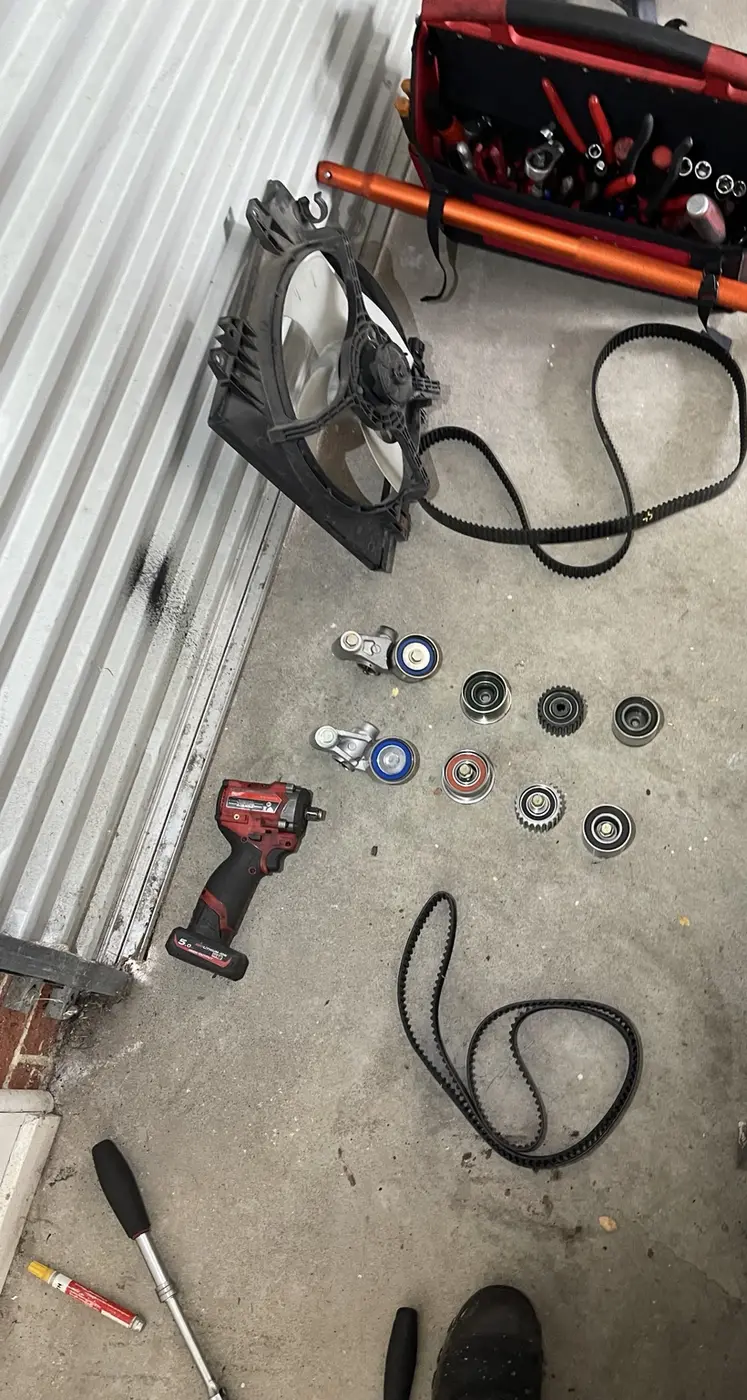
What does a timing belt do?
On an engine fitted with one, the timing belt keeps the crankshaft and camshaft movement synchronised so the valves operate at the correct time. A failed timing belt can stop the engine and, on some engine designs, cause serious internal damage.
Some engines use a timing chain instead. The badge or model name alone may not identify the system because different engines can be fitted within the same model range. Provide the registration or VIN, year and engine details so the correct maintenance requirements can be checked.
What does an accessory drive belt do?
An accessory belt, often called a serpentine belt, drives components such as the alternator and air-conditioning compressor. Depending on the engine layout, it may also drive a water pump or hydraulic power-steering pump. The components driven by it vary between vehicles.
An invoice for an alternator belt or accessory drive belt does not establish that the timing belt was replaced. If your records simply say 'belt', ask the repairer to identify the component and work completed before relying on that entry as timing-belt service history.
When should the timing belt be replaced?
Use the maintenance schedule for the exact engine, including any applicable time and kilometre limits. There is no single replacement interval that suits every car. A vehicle that travels only short distances can still reach its time-based interval.
Do not wait for a squeal or warning light to decide that a timing belt is due. Its appearance alone cannot establish its remaining life. If you have recently bought the car and cannot find evidence of replacement, ask for the schedule and records to be reviewed promptly. A general service entry may not include timing-belt work.
Does a squealing belt only need a new belt?
Noise from an accessory belt system can involve the tensioner, pulley alignment or another driven component. Fitting a belt without checking the cause may leave the problem unresolved. Describe when the noise occurs, such as during a cold start or with the air conditioning operating, using observations you have already made.
Keep hands, tools and clothing away from moving belts. If a belt breaks or comes off, stop safely and seek assistance. The affected systems depend on the vehicle, so do not assume it is safe to continue because the engine still runs.
What should a timing-belt quote include?
Ask which tensioners, idlers and other scheduled items are included, as well as the belt itself. A water pump may be relevant when it is driven by the timing belt or access overlaps. The appropriate scope should be explained for your engine rather than assumed from a generic kit description.
Confirm the parts, labour and any related fluids or approved additional work. Keep an invoice recording the date, odometer reading and components replaced. That record helps the next mechanic establish what has actually been done.
- Exact vehicle and engine application
- Applicable maintenance interval and available replacement history
- Belt, tensioners and idlers included in the proposed work
- Whether a water pump or related items are recommended, and why
- Suitability of the location and equipment for the job
Can the work be done at home in St Kilda East or Elwood?
A & A offers mobile drive-belt work where access is suitable. Timing-belt replacement needs a separate suitability check because the engine design, timing tools and working space can make the job more involved. Some vehicles require workshop facilities.
Send your vehicle details, kilometres, service records and parking information when enquiring from St Kilda East, Elwood or nearby Balaclava. Explain whether you are checking a maintenance interval or reporting a current fault. A & A can then discuss the appropriate assessment, repair scope and availability.