Confirm what has failed before choosing a repair
A click, slow crank or intermittent no-crank is a symptom, not proof that the starter motor itself has failed. A technician should assess battery condition, cable connections, earths and the relevant starter-control circuit. Voltage-drop testing under load can help identify resistance that is not obvious from a visual inspection.
If the engine turns over normally but does not start, the diagnosis generally needs to look beyond the starter motor. Tell the mechanic exactly what you hear and whether the fault happens when the engine is cold, hot or both.
When repairing the circuit may solve the problem
A loose or damaged connection, a poor earth or a fault in the control circuit may prevent a working starter from operating. When testing identifies one of these faults, repairing that cause can be more appropriate than replacing the motor.
Ask what test result supports the proposed work. A clear explanation should distinguish the failed component from other possibilities and describe how the repair will be checked afterwards. Replacing a starter will not correct an unresolved battery or cable fault.
When a complete replacement may be more practical
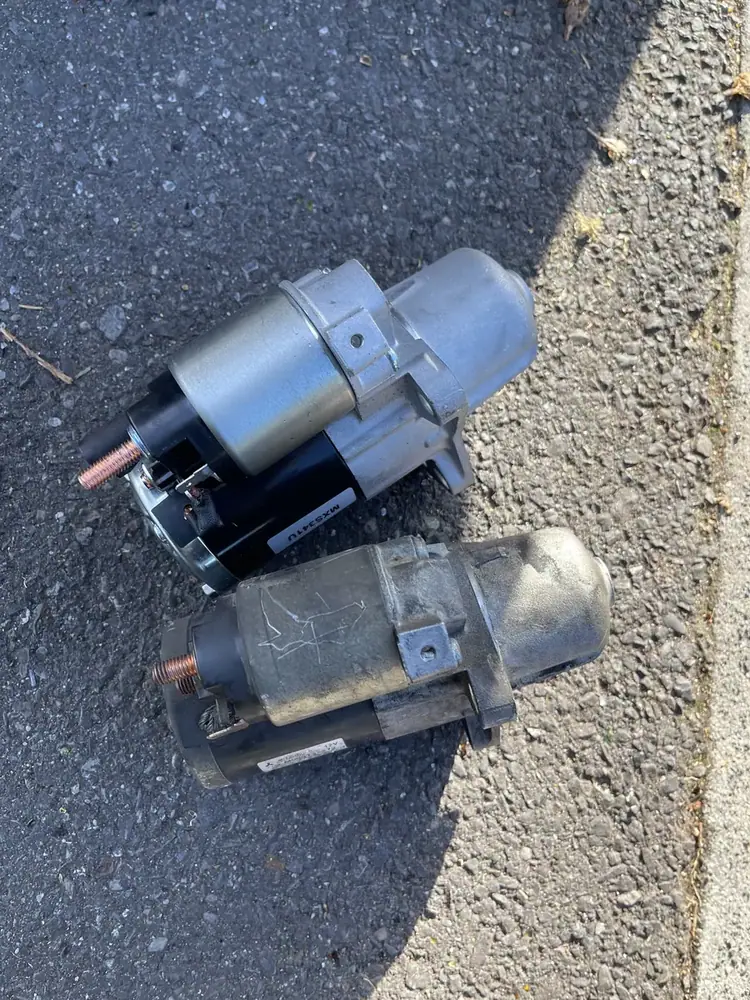
If testing confirms an internal starter fault, the options depend on its design, condition, available parts and access. Some units can be rebuilt by a specialist; others are more practical to replace as an assembly. Internal repair is not automatically available during a mobile visit.
Compare the full job rather than the component price alone. Removing the starter, sending it for assessment, sourcing internal parts and refitting it can mean extra downtime. A suitable replacement may be the more practical option, but availability and suitability must be confirmed for your exact vehicle.
What should a starter-motor quote include?
Two cars of the same model can use different starters depending on the engine, transmission and production date. The registration or VIN helps identify the correct application. Access also matters: a starter that is easy to reach may involve less work than one behind other components.
Before approving the job, ask for the diagnostic or call-out charge and repair scope to be explained. Confirm whether any initial charge is included in the final amount; do not assume it is waived.
- The proposed part and whether it is new or remanufactured
- Labour, diagnostic charges and the total including applicable GST
- Whether additional removal work is included
- Parts availability and the proposed appointment
- Warranty coverage, exclusions and the process if a problem returns
Can it be replaced at a St Kilda or Balaclava address?
Mobile starter replacement may be possible at a suitable home, workplace or parking location. It depends on how the starter is accessed and whether the vehicle can be worked on safely. A roadside position that allows a battery test may still be unsuitable for a repair requiring access underneath.
For apartment parking in St Kilda, St Kilda East or Balaclava, share the entry clearance, available space, lighting and building permission before booking. A photograph of the parking position can help explain access. If the location or job is unsuitable, a safer location or workshop may be required.
What to send with your enquiry
Send the make, model, year, engine details if known, registration or VIN, and exact suburb. Describe whether there is one click, repeated clicking, slow cranking or no sound. Mention recent battery replacement, jump-start attempts and any previous diagnosis.
A & A can then discuss the next diagnostic step and confirm mobile suitability, parts and availability. Same-day service depends on the schedule and parts supply. Once work is completed, ask what checks were carried out to confirm normal starting.