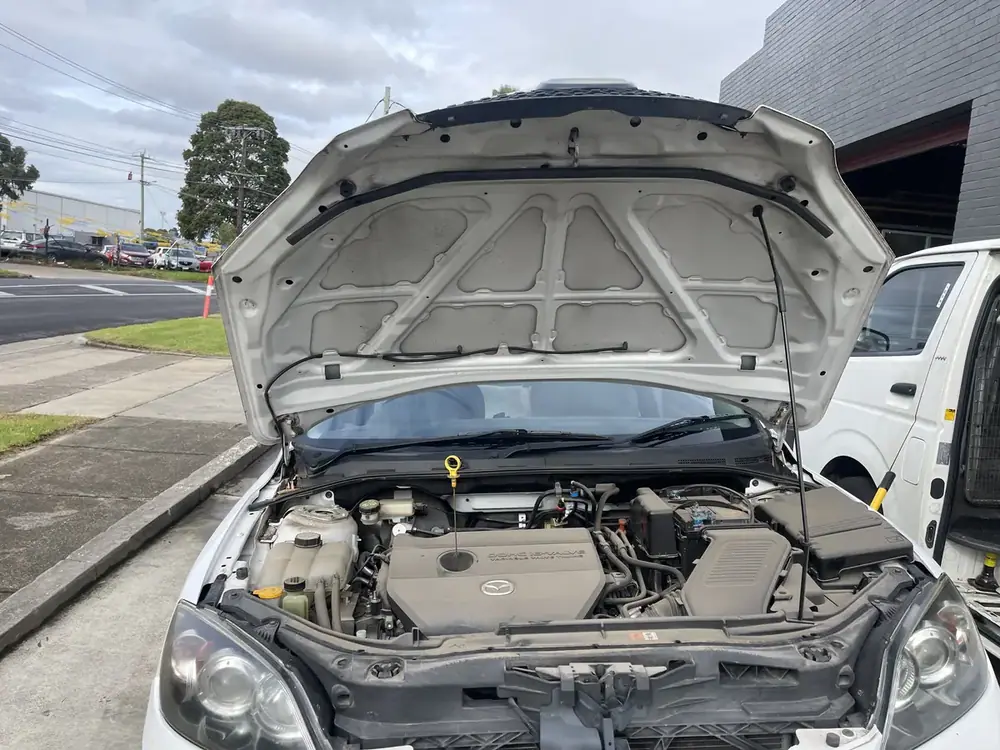
Start with the warning lights and how the car feels
A flashing check-engine light can indicate a misfire capable of damaging the catalytic converter. If the light flashes, the car shakes severely, loses significant power or repeatedly stalls, stop somewhere safe and arrange assistance. Follow the instructions for the exact warning in your vehicle's handbook.
Do not repeatedly rev the engine or take a test drive to see whether the fault clears. A steady warning light, or no light at all, does not establish that driving is safe. Explain the symptoms before deciding how to move the vehicle.
What do spark plugs and ignition coils actually do?
In a petrol engine, the ignition coil supplies the high voltage needed for a spark plug to ignite the air-fuel mixture. A problem in that system can cause hesitation or uneven running. Diesel engines use a different combustion system, so petrol spark-plug advice does not apply to them.
However, rough running can also involve fuel delivery, air leaks, wiring or an engine mechanical fault. Similar symptoms can have different causes. Tell the mechanic what you have noticed without assuming that a particular replacement part will solve it.
A fault code is a starting point for diagnosis
A scan can help identify where the engine control system has detected a problem. It does not, by itself, prove that a coil or spark plug has failed. The recorded information needs to be considered alongside the symptoms, service history and appropriate physical checks.
Depending on the vehicle and access, assessment may include available cylinder data, plug condition, coil operation and accessible connections. If the evidence points elsewhere, further fuel-system or mechanical testing may be needed. Ask what the findings establish and what remains uncertain before approving parts.
Write down when the rough idle occurs
Useful observations are those you have already made. Explain whether the problem began suddenly or gradually and whether any work was recently carried out. Share previous diagnostic reports or invoices, including repairs that did not resolve it.
A short video of an existing symptom may help if it can be captured safely while parked. Do not restart a badly running engine just to record it, and never use your phone to film while driving.
- Make, model, year, fuel type and registration or VIN
- Whether it happens at a cold start, once warm or throughout the journey
- Whether the engine feels uneven only at idle or also during normal acceleration
- Any warning symbol or message, including whether it flashes
- Odometer reading, recent work and known spark-plug replacement history
Should every plug and coil be replaced?
Spark plugs are maintenance items, but the correct specification and replacement interval depend on the engine. Check the vehicle's schedule and records rather than assuming a general service included them. Worn plugs can place extra demand on ignition coils, so plug condition matters when investigating an ignition fault.
Replacing every coil is not an automatic requirement. Ask which parts testing has identified, whether scheduled plug replacement is due and why any additional work is recommended. Agree the scope and price before repair, and retain the invoice for future servicing.
Arrange a mobile assessment in St Kilda or nearby suburbs
A & A provides mobile ignition-system diagnosis and suitable spark-plug and coil repairs. When booking in St Kilda, Prahran or Windsor, send the vehicle details and symptom notes along with your parking location and access information.
A safe, suitable workspace is necessary, and some vehicles or faults require workshop facilities. The initial assessment determines the next step; an on-site repair depends on the findings, access and parts availability. Confirm appointment availability and the diagnostic scope when enquiring.