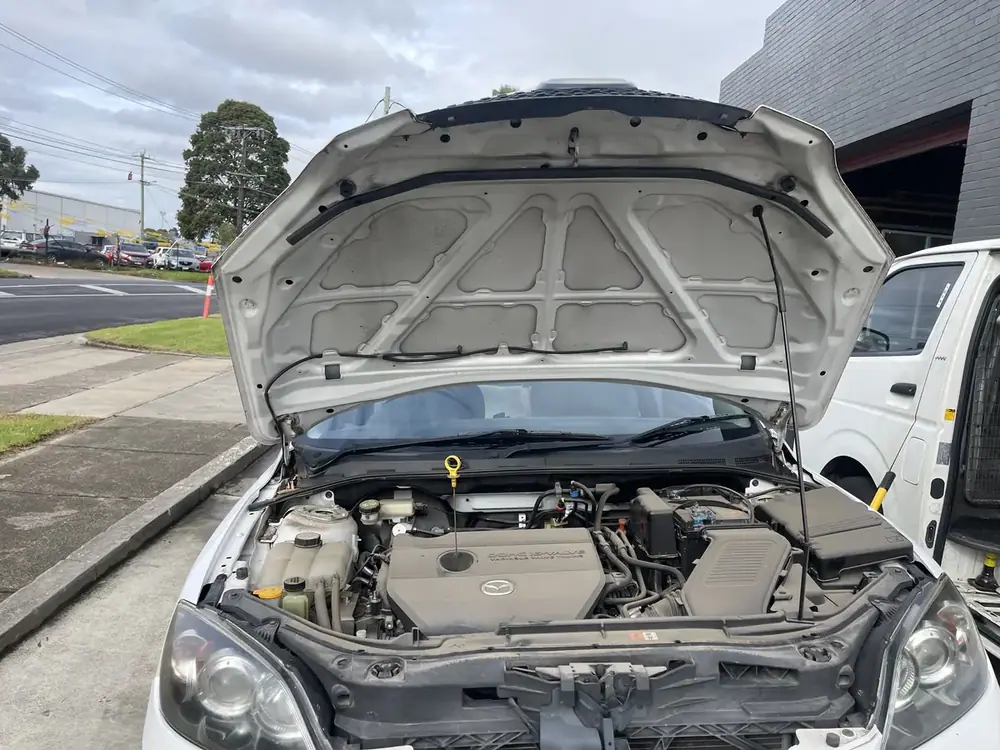
1. Send the vehicle details before booking
Share the advertisement, make, model, year, kilometres and registration or VIN. Mention the engine and transmission if known, along with any modifications or faults disclosed by the seller. This helps confirm whether the proposed inspection suits the vehicle.
Tell the mechanic what concerns you most. A warning light, coolant loss, delayed gear changes or a noise on a cold start deserves a different discussion from routine wear. If you need a specialist assessment, clarify that before paying for a general inspection.
2. Agree access with the seller
Ask the seller to make the keys and available service records accessible and confirm permission for the inspection, diagnostic scanning and any road test. Arrange a time when there is enough opportunity to complete the agreed checks rather than rushing between other viewings.
Ask whether the engine can be left cold before the appointment. Starting behaviour from cold can provide useful information, but a cold start cannot be assessed if the car has already been driven. That limitation should be noted rather than treated as a completed check.
3. Check the St Kilda parking location
A suitable driveway or private parking space is preferable to a busy roadside position. The mechanic needs safe access around the vehicle, adequate light and permission to work at the location.
For an apartment car park in St Kilda or Balaclava, provide gate instructions, entry clearance, lighting and space details. Underground parking may limit access or safe engine-running checks. A mobile visit does not provide the same access as a workshop hoist; ask which underbody observations can be made safely.
4. Confirm what is included and what is not
A & A's pre-purchase service considers general mechanical condition, accessible fluids and leaks, tyre and brake observations, steering and suspension observations, dashboard operation and available service history. A diagnostic scan is included where supported by the vehicle.
A road test depends on the vehicle being registered, safe to drive and the seller permitting it. If it cannot be completed, ask what remains unassessed. This service is not a roadworthy certificate, formal valuation or guarantee of future reliability.
- Confirm the inspection fee and scope before booking
- Ask how findings will be delivered and explained
- Clarify whether specialist body or hybrid/EV battery assessment is needed
- Ask which components cannot be inspected without dismantling
5. Read service records alongside the inspection
Ask for service invoices as well as stamped records. Dates, kilometres and descriptions can help show what work has actually been documented. A missing invoice does not prove a part has failed, but it leaves uncertainty about whether scheduled work was completed.
Where a vehicle uses a timing belt, ask for evidence of replacement and have the applicable maintenance schedule checked. Do not assume a clean engine bay, fresh oil or a recent service means every maintenance item is up to date.
6. Separate urgent concerns from maintenance
After the inspection, ask which findings raise immediate safety concerns, which need further diagnosis and which are maintenance items. A visible leak may need additional testing to establish its source; a fault code alone does not always identify the failed component.
Request clarification of anything that could not be checked. Intermittent faults may not occur during the appointment, and concealed damage or internal wear may remain undetected. Use the findings to decide whether you need further testing or repair estimates before making your purchase decision.